
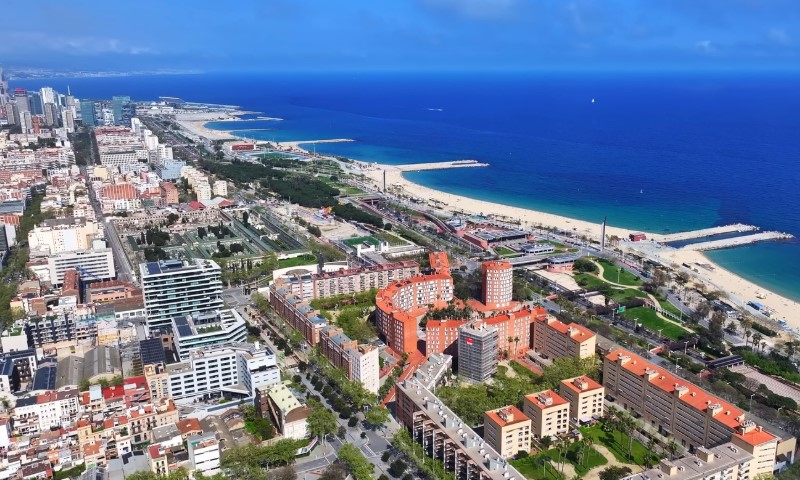
Barcelona is one of the rare cruise destinations where you can step off the ship and start exploring on foot,but with one important detail most guides skip.
If your ship docks at the main cruise terminals (Moll Adossat), the actual walking route to the city center takes 25 to 45 minutes, depending on the terminal.
However, once you reach the Columbus Monument / Port Vell area (often via the €3 shuttle), everything becomes highly walkable.
From that point, you can realistically explore:
- La Rambla
- Gothic Quarter
- Waterfront attractions
- Markets, museums, and beaches
All within a 10–25 minute walking radius.
1. Port Vell (Old Port)
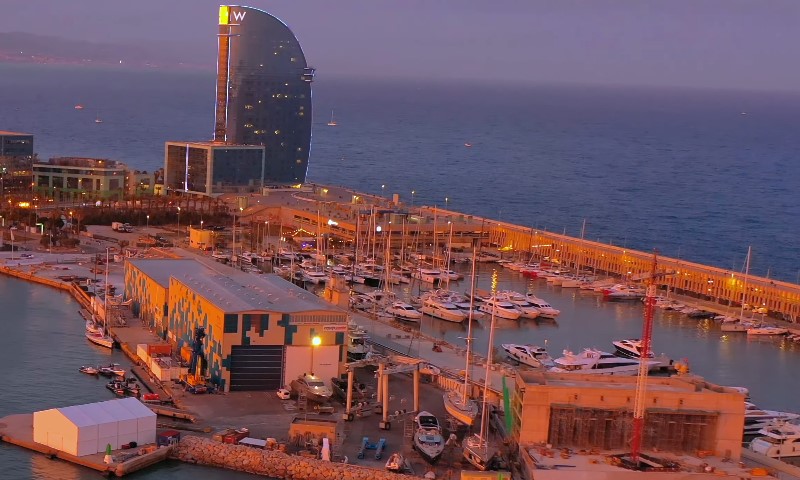
Distance: immediate from city entry point
Port Vell is the transition area between the cruise infrastructure and the city. It is not a separate attraction you schedule. It is the space you move through as you enter Barcelona properly.
The layout is wide and open, which allows you to orient quickly without needing maps. You have clear sightlines toward the Columbus Monument, the wooden bridge toward Maremagnum, and the beginning of La Rambla. This reduces wasted time, which matters during a short stop.
In practical terms, you walk through Port Vell while adjusting pace after leaving the ship. Most people spend 20 to 30 minutes here without realizing it, especially if they pause for photos or coffee.
2. Columbus Monument (Mirador de Colom)
Distance: 5 minutes
This is the functional starting point for your walking route. It marks the exact connection between the port and the city grid.
From here:
- La Rambla starts directly ahead
- Gothic Quarter is reachable within 10–15 minutes
- Port Vell remains behind you as your return path
You can go up the monument for views, but most cruise visitors use it as a navigation anchor. It is the easiest place to return to when heading back to the shuttle.
Time needed: 10–20 minutes unless you go up
3. La Rambla
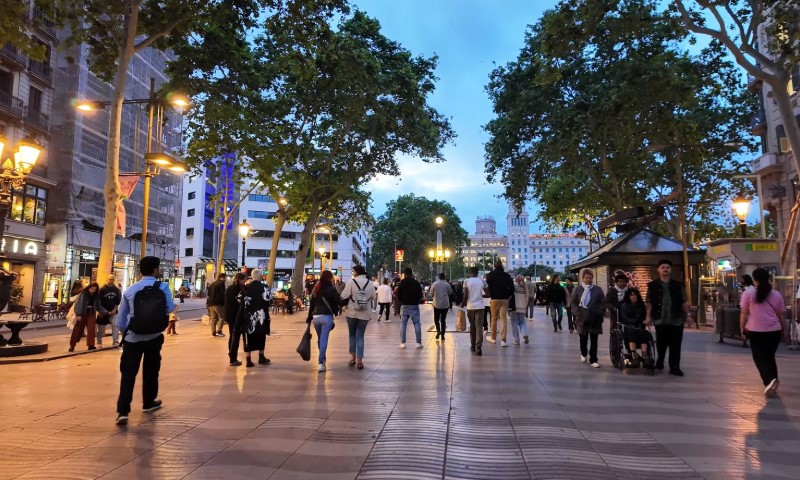
Distance: starts at Columbus Monument
La Rambla is not a sightseeing stop in the traditional sense. It is the main pedestrian corridor that connects everything.
It runs for about 1.2 km and carries constant movement. The value is not in any single point but in how efficiently it moves you through the city.
You pass:
- Food kiosks
- Cafés
- Street performers
- Side streets leading into the Gothic Quarter
Walking the full stretch takes around 20–30 minutes without stops. With pauses, expect closer to 60 minutes.
This is the fastest way to cover ground without losing direction.
4. Mercat de la Boqueria
Distance: 10–15 minutes from port area
This is the most efficient place to eat during a cruise stop. No reservations, fast service, and clear pricing.
You enter directly from La Rambla, which makes it easy to include without changing your route. The market structure allows you to choose between quick snacks or full plates depending on time.
Typical pricing:
| Item Type | Price Range |
| Fresh juice | €2–4 |
| Small tapas | €5–10 |
| Seafood plate | €12–20 |
Time needed: 30–45 minutes
The main advantage is speed. You get local food without committing to a long restaurant experience.
5. Gothic Quarter (Barri Gòtic)
Distance: 10–15 minutes
This is the oldest part of Barcelona and the only area on this list where structure disappears. Streets are narrow, irregular, and not designed for direct movement.
You do not follow a route here. You move slowly and explore.
What changes compared to La Rambla:
- Noise drops
- Streets narrow significantly
- Movement becomes slower
You will encounter:
- Barcelona Cathedral
- Small internal squares
- Local shops and cafés
Time needed: 60–90 minutes
This is where most people spend the longest time without noticing.
6. Barcelona Aquarium
Located directly in Port Vell, the Barcelona Aquarium is one of the closest structured attractions you can include without disrupting your walking route. The main advantage is control. Unlike the streets outside, the environment is predictable, organized, and not affected by crowds or weather conditions. This makes it a practical stop if you need a break from constant movement or if conditions outside are not ideal.
The visit itself is straightforward. You move through clearly defined sections, with the highlight being the long underwater tunnel where sharks and large fish pass overhead.
It does not require planning or waiting in most cases, which is why it fits well into short gaps between other stops. It is not essential if your goal is to explore the city itself, but it is one of the easiest add-ons because it sits directly along your path.
| Activity Level | Time Needed |
| Quick walk-through | 45 minutes |
| Full visit | 1.5–2 hours |
7. Maremagnum
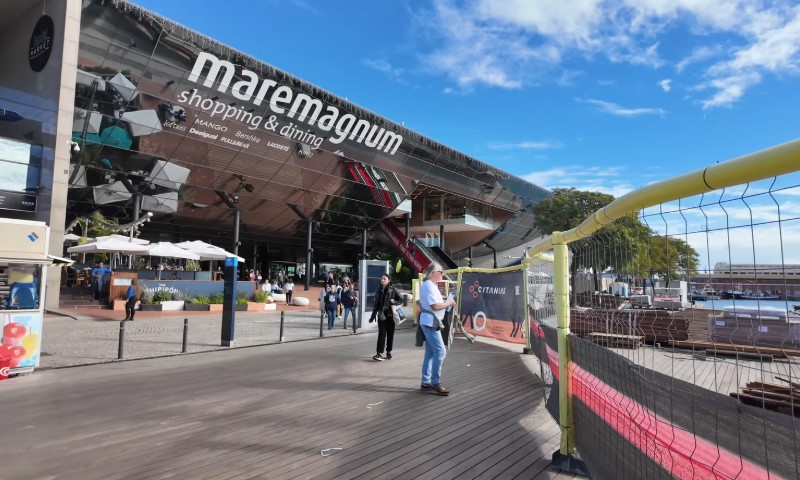
Maremagnum sits on the water and is reached by crossing the wooden Rambla de Mar bridge from Port Vell.
The movement toward it is smooth and direct, with no elevation or complex navigation, which is why many cruise visitors naturally pass through this area even without planning to.
This location is not designed as a major attraction. It functions as a support point within your route. You use it to stop briefly, eat something simple, or sit down before continuing toward La Rambla or back toward the port.
The restaurants are positioned for convenience rather than depth of experience, and the shopping is basic. It works best when you need a short pause rather than a destination.
8. Maritime Museum
The Maritime Museum is located near La Rambla inside the historic Drassanes shipyards, which immediately changes the tone of your visit. Unlike open streets or markets, this is a contained space with a clear beginning and end. The structure itself is large, quiet, and built for slower movement, which provides a different pace compared to the rest of the route.
Inside, the focus is on naval history, shipbuilding techniques, and trade routes that shaped Barcelona’s role as a port city. The exhibits are organized in a linear way, so you do not lose time navigating.
This makes it a practical choice if you want one defined cultural stop without committing to a long museum visit. It fits naturally into the route because it sits just off La Rambla, requiring no major detour.
| Visit Type | Time Needed |
| Short visit | 45 minutes |
| Full walkthrough | 60–75 minutes |
9. Barceloneta Beach
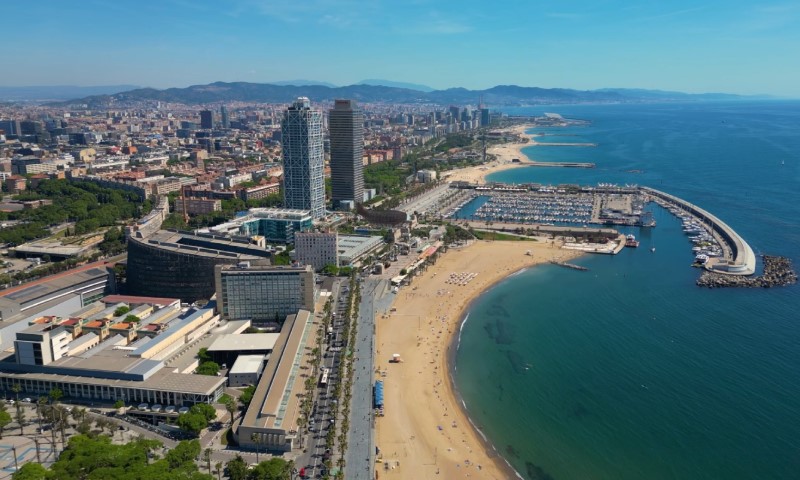
Barceloneta Beach is the farthest location on this list but still reachable on foot within 20 to 25 minutes from the main port area.
The transition is noticeable. Dense streets and narrow passages give way to open space, wide promenades, and a clear horizon. Movement slows down naturally because the environment changes from exploration to relaxation.
This area works best when you have already covered the core city stops and still have time remaining.
The focus shifts toward sitting, eating, or walking along the water rather than actively exploring. Restaurants become more relevant here, especially for seafood, and the overall pace is significantly slower. It is not necessary to include, but it adds a different layer to the visit if time allows.
10. Plaça Reial
Plaça Reial is located just off La Rambla, but it requires a slight turn that many people miss. The transition into the square is immediate. You move from a crowded pedestrian street into a contained, symmetrical open space surrounded by uniform architecture.
The layout is simple and efficient. Restaurants and cafés line the perimeter, while the center remains open. This makes it suitable for a short stop without committing much time.
It fits naturally between La Rambla and the Gothic Quarter and does not require any adjustment to your route. The main value is the change in atmosphere. It provides a controlled, quieter space before continuing deeper into the city.
Bottom Line
Barcelona becomes fully walkable only after you reach the city edge near Port Vell. From there, the layout is compact, direct, and efficient.
If you stay inside this zone, you can cover multiple meaningful locations without transport and without rushing. However, Barcelona was and will remain one of the most beautiful cities in Spain and Europe.